Tyler’s first day of school was much like the other first days he had experienced over the past few years. The main differences were that no one in this school was required to wear a uniform, and he did not see anyone drinking coffee. In each of his classes, the teacher would make him stand up while they announced his name, reported that he was a new student, and instructed everyone to make him feel welcome. Since many of the same people were in most of his classes, he felt as though he had been introduced to the same people at least five times.
After school, he made his way to the front door of the building and stepped out onto the steps. Most of the other students went out on the other side because that was the street where the bus stop and student parking lot were located. There was also a driveway for parents to pull in to pick up their children. Tyler had glanced out that door as he passed by. There were no limos, Mercedes, or BMWs out there. That was another difference.
He reached into his coat pocket to get his phone. He did not know why he had picked this coat. It had been raining this morning, so he had naturally decided he needed a raincoat. He did not think he should have shown up for his first day in a three-hundred-dollar coat from J. Crew. Most of the other kids looked like their clothes had come from GAP, and he now wished he had gone for that look, too. No one said anything to him about his clothes, but he had caught a couple of glances and heard some whispers. He guessed that was what they were talking about.
Just as he was dialing the number to get a taxi to come and pick him up, the door opened and he was nearly knocked down the steps by the boy coming out. The guy had a stack of books in one hand and was carrying a cardboard box filled with wires and other bits of computer hardware under his other arm. The boy never saw Tyler, but Tyler saw him as he was about to blindly step off the steps and crash to the sidewalk. He put his arm out and stopped him just as he held his foot out into thin air.
“Hey!” Tyler said, a bit loudly. “You’re gonna fall!”
The boy stopped and took a step back. He looked at Tyler with a confused look in his eye.
“Uh, thanks,” he said. “It’s hard to see with all of this stuff .”
Tyler took the box from him and tucked it into the crook of his arm.
“Here,” he said. “I’ll help you. Where are you headed?”
“Huh?” the guy said. “Oh! I’m just going to my dad’s store. It’s a block that way.” He pointed down the street.
“Okay,” Tyler said. “Let me carry this for you. I wouldn’t want you to have an accident.”
“Thanks,” the kid said. He still sounded confused and even a little bit nervous. “I’m Stan. Uh, Callahan. Stan Callahan.”
Tyler held his hand out and Stan took it. They shook.
“I’m Tyler McDawn.”
“Oh, I know who you are,” Stan said. “We have lit together.”
“Third period?” Tyler asked. It was a genuine question. He still had not memorized his class schedule.
“Yeah,” Stan said. “And you live in my Grandfather’s building.”
“You’re Grandfather lives in the Simmons building?” Tyler asked.
“No,” Stan replied. “He owns it. He’s Daniel Simmons.”
“Oh,” Tyler said. “Wow! I think I met him last weekend when we were moving in.”
“You did,” Stan said. “He told me about you. He said you looked like a smart guy.”
“Well, I wish you had introduced yourself earlier,” Tyler said. “I haven’t really met that many people since I moved to town.” They started walking down the steps and turned in the direction Stan had indicated.
“I wouldn’t want to wreck your reputation,” Stan said, smiling shyly.
Tyler cocked an eyebrow. “What does that mean?”
Stan made a gesture toward Tyler’s clothes and pointed at his shoes. “You’re one of the rich kids. You could be popular at this school. You don’t need to be seen hanging around me. I’m just a techie nerd.”
Tyler smiled. “Stan, I’m not like that. Really. That kind of social ladder stuff doesn’t phase me. I make friends with people I want to be friends with.”
“Well, you may not be like that but everyone else is,” Stan said. “Like right now. If someone saw you and I walking together, people would hold that against you later.”
“Screw ‘em,” Tyler said. “I told you. I don’t care about stuff like that.”
“Well, then you’re a rare breed,” Stan said.
“Maybe,” Tyler replied. “Besides, if your grandfather owns the Simmons building then your family has to be pretty well off.”
“Yeah,” Stan said. “He is, anyway. My dad owns a used bookstore down the block. But I guess you can call my family rich. They want me to go to some fancy boarding school that’s like fifty miles from here, but the science department sucks. I had to beg them to let me go to school here.”
Tyler glanced down at the box that he was carrying. He had already seen the wires in it. Under it, there appeared to be a couple of circuit boards and some other various metal and plastic objects. “What’s in the box?”
“Oh, it’s just some supplies,” Stan said. “I’m building a computer.”
“You’re building a computer?” Tyler said. “You say it like it's easy.”
“It's not hard,” Stan said. “I mean, I’ve got some old ones at my house that I’ve taken apart a bunch of times. I know how they go back together. I’ve been trying to learn how to write programs.”
Tyler grinned. “And, you’re seventeen?”
“Fifteen,” Stan said shyly. “I skipped the eighth and ninth grades.”
“That’s cool,” Tyler said. “I know how to use a computer well enough to update my Gram and watch the cat playing the piano on YouTube. That’s about it. Unless you count playing Xbox games.”
They both laughed as they crossed the street to the bookstore. Just as they reached the sidewalk, Tyler happened to glance back to the side they had just come from. A man was standing in the shadows of an overpass about a block away. He looked like he had long hair that was pulled into a ponytail and then draped over his shoulder, so that it was visible from the front. He had on a long black coat, like Tyler’s raincoat but much older and worn. He was staring at them.
“Tyler?” Stan asked. He followed Tyler’s gaze and saw the man, but he was turning away and headed down the street. “Somebody you know?”
“He looks familiar.” Tyler did not know why he said that. The man did not look familiar. He was sure it was no one he had ever seen before. But at the same time, he felt like it was someone he was supposed to know. “It doesn’t matter. Is this your dad’s store?”
They went inside. The place was exactly the kind of place Tyler imagined it would be. It was small, and filled with bookshelves. There had to be at least twenty shelves that were ten feet long and seven feet tall. They were filled on both sides with books that looked anywhere from almost new to almost dust. A desk was in the front corner of the store, not far from the door. A thin man was sitting at that desk, typing away on a laptop.
“Hi, Dad,” Stan said, setting his books down on the desk. He took the box from Tyler and set it there as well.
The man looked up from his computer screen and smiled. He adjusted his glasses.
“Hi, son,” he said. “Time got away from me. I didn’t realize that it was after three o’clock already.”
“My dad is a writer,” Stan said to Tyler. “He writes for the Tribune. He usually does his writing here at the store.”
“Who is this?” Stan’s dad asked.
“This is Tyler,” Stan said. “Today was his first day. He helped me carry my stuff here.”
“Oh,” Mr. Callahan replied as he reached a hand out to Tyler. “Well, that was good of you, Tyler. Do you mind if I ask where you’re from?”
Tyler accepted the hand and shook it. “Atlanta, most recently,” he said. “My father runs the natural history museum downtown.”
“Ah, yes,” Mr. Callahan said. “Daniel McDawn. I’m covering the gala tonight. Which reminds me, Stan. You need to get home quickly and change if you’re planning to go with me. Your mom picked your suit up from the cleaners this morning. Tyler, is there something wrong?”
Stan’s father was referring to the wide-eyed look of panic that had just come across Tyler’s face. He pulled his phone from his pocket and looked at the time.
“I’m fine,” he replied. “It's just that I forgot about the gala. I’m supposed to be home by four to meet my dad. I’ve got to go!”
“You’re never going to make it to the Simmons building by four,” Stan said. But Tyler was already gone. He was running down the street and trying to dial his phone at the same time.
__________________________________________________________________________
“Hey, kid!” Tyler stopped and wheeled around, sliding on the heel of his shoe. The taxi was coming to a stop about half a block behind him. “Are you the one that called a cab?”
“Yes!” Tyler yelled breathlessly. He jogged to the car and slid into the back seat. He was surprised to see that this was the same taxi that he was in this morning, and the same man was driving it. “I need to get to the Simmons building.”
He closed the door and the man guided the car away from the curb and back into traffic. They made their way toward the other end of town at a steady speed. The traffic would not pick up for another hour or so, but there was always a heavy stream of cars at all hours.
“You’re my first fare to ever call for an on-the-go pickup,” the driver said with a laugh. He looked in his mirror and noticed that Tyler was still pretty red-faced and breathing heavily. “You okay, kid?”
“Yeah,” Tyler said. “I’m just out of breath.” The truth was that he had asthma. He did not usually worry about it because it only flared up when he got out of breath. He did not play any sports, so it was not usually an issue. He hardly ever carried his inhaler with him, and today was no different. Had he known that he would be forced to run ten blocks he would have grabbed it.
“Well, we’re gonna have to take the long way ‘round,” the man said. Tyler groaned. “Sorry, but they’ve got a big chunk of downtown closed off. The mayor’s makin’ a big speech today.”
Tyler remembered hearing about it on television this morning while he was getting dressed for school. The mayor was appointing a task force to tackle the rising crime rates in the city. From what he heard, Birmingham had nearly three hundred violent crimes in the past year, and two-thirds of those had ended in death. He had to hand it to his dad. Going to a violent city with one a low graduation rate, much less a terrible economy, and opening one of the largest natural history museums in the world had to be risky. He had a lot riding on this museum, which in turn had a lot riding on the gala tonight.
Sure enough, Tyler looked in front of him and saw nothing but brake lights stretching for at least three blocks. A lot of people must have decided to park here and wait out the speech. It was scheduled to last a couple of hours but Tyler knew it could not last too long because the mayor and his wife were supposed to be appearing at the museum gala tonight.
“Stupid,” the driver muttered as he made a left-hand turn to an area between two buildings that Tyler was not even sure was meant for cars. “This guy don’t do nothin’ but sit on his butt and take his pay! The only time you hear from him is when he’s doin’ stuff like this. Holdin’ up traffic and stuff!”
The driver did not seem to care for the mayor.
“If you ask me, I’d say that he’s the whole problem!” the driver continued.
“The mayor?” Tyler asked. He did not know why he cared. He guessed he was just trying to keep his mind off of the fact that they had just cut around a stopped school bus and had driven with one wheel on the sidewalk for at least ten feet.
“Yeah,” the man behind the wheel replied. “This town was something back in the day. Low crime rate. Lotsa jobs. Not a whole lotta folks standin’ in line down at the soup kitchen. Then this guy gets in office and it all goes ta crap. You follow politics?”
“Not really,” Tyler said. “I took a government class last year. But that was back in Atlanta.”
“Ah, yer just a kid anyway,” the man said. “You’ll be worryin’ ’bout this stuff in a few years, though.”
__________________________________________________________________________
It was a pretty quick trip and Tyler found himself easing across the seat and opening the door after only ten minutes. He looked down at his phone. He was late, but he was not as late as he had feared.
He gave the driver his driver’s license just like he had this morning. The driver slid it through his reader and another green “accepted” appeared on the screen. Tyler thanked the man and stepped out of the car onto the sidewalk in front of the Simmons building. He nodded to the doorman in the long red coat who smiled and opened the door for him.
“Good afternoon, Mr. McDawn,” the man said with a light trace of an English accent. “I’ve just gotten a call from your father.”
Tyler looked at him and winced. “You have?”
The man grinned. “Yes, sir. He’s in quite a state.”
Tyler rolled his eyes. “Wonderful,” he said.
Five minutes later he approached the door of the apartment he shared with his father. He heard a beep and a click as the lock let go of the door. He turned the knob and went inside. His father was standing ten feet away, having heard the door.
“Tyler,” he started.
“Dad, I’m not that late,” Tyler started. “The gala doesn’t even start until eight.”
“Yes, son,” Daniel McDawn was saying. “But I have to be there at six. I have a photographer coming to take pictures of the exhibit and the caterer already has people there setting up for the banquet.”
“Well, go,” Tyler said. “I can get there on my own. I made it to school and back. Didn’t I?”
“We’re supposed to show up together,” he replied. “There will be reporters taking a lot of pictures when I get out of the limo, and I would like to arrive with my family. That’s you, Ty. Your tux is in your room.”
Tyler shook his head and made his way through the apartment toward his room. “I don’t see why this thing is such a big deal. You had parties like this all the time in New York and London.”
“This is different,” Daniel said, halfway following his son down the hallway. “You don’t realize what we’re unveiling tonight. The excavation in Greece has uncovered some really remarkable things, and we get to display some of the highlights right here.”
“I know the drill, Dad,” Tyler was saying from inside his room. His tuxedo was hanging on the closet door and he began pulling off his shoes to get dressed. “I’ve seen all of the fossils and mummies before. I grew up in museums.”
“This is more than just fossils and mummies,” Daniel said as he stood in the doorway. Tyler was busy pulling on the tuxedo pants and Daniel looked at his curly hair. “Aren’t you going to take a shower?”
Tyler rolled his eyes and pulled the pants back off. He turned and walked into the bathroom and closed the door.
“What’s different about it?” he called through the door.
“This is evidence of ancient stories that even the Greeks didn’t believe in,” Daniel said. He heard the shower start running. “I don’t have time to go into the stories right now, but I’m going to talk about it tonight. I gave you a copy of the press release.”
“I didn’t read it,” Tyler said.
“Oh, right,” Daniel replied. “I forgot that you don’t like to read books without pictures.”
“You’re talking about comics, Dad. And I haven’t read one of those since I was fourteen.”
Daniel grinned. “Anyway, this is an important step in my career. I’ve run several museums, but this could be the one that I’m known for after this exhibit opens. And it could help to bring a lot of positive attention to this town.”
The shower stopped and a couple of minutes later Tyler stepped out of the bathroom with a towel wrapped around his waist. He folded his arms across his chest. He did not like to be seen without a shirt on. He still felt like he was underdeveloped for his age. He guessed he looked fine, but he wanted some definition in his arms and chest.
“I’m sorry I was late, Dad,” he said. “I’m proud of you and everything is going to be fine tonight.”
Daniel smiled. “I know it will. But it’s hard not to be nervous about things like this. By the way, I was so flustered when you came in that I didn’t ask you about school. How was your first day?”
“It was fine,” Tyler said. “Teachers, classes, lunch. You know.”
“Did you make any friends?”
Tyler rolled his eyes but laughed at the same time. “What am I? Twelve?”
“Well, did you?” Daniel asked again with a chuckle.
“I met this one kid named Stan,” Tyler said. “His grandfather owns this building and his dad writes for the newspaper. He’s going to be there tonight.”
“Good,” Daniel said. “Make sure to introduce me.”
“I will,” Tyler said. “Now go away and let me get dressed.”
Daniel turned and walked toward the door of the bedroom. “Okay, but hurry. The car will be here in half an hour.”
Tyler promised he would. He closed the door behind his father and started getting dressed for the evening.
Monday, November 28, 2022
Griffin Chronicles--Chapter One
Tyler rubbed his eyes slowly, trying his best to get the thudding pain pushing against them to ease up. He had taken three Aspirin before he left home, but they did not even begin to touch the fire burning in his skull. He reached into his backpack and got his sunglasses. It was a cold, rainy day, and he was pretty sure he would not see the sun at all, but he needed to turn the brightness down a little. In his mind, he could almost see the little bar at the bottom of a television screen, and he willed the notch to move to the left.“Late night?”
Tyler lifted his head off the headrest and looked at the man driving the car.
“No,” he said. His voice sounded a bit rough, and he cleared his throat. “No. I didn’t get much sleep last night. I’m just a little nervous.”
“Big day today?” the man asked.
“I’m new in town,” Tyler answered. “This is my first day at this school.”
The man nodded, and began talking about how he was always nervous on his first day of blah, blah, blah. The only thing Tyler hated about riding in a taxi was small talk. The smell and the filth of sitting in the same backseat as a million other passengers were bearable. It was the constant chatter that he hated.
Tyler would not normally be in a taxi. Most of the time, he would either drive himself unless he was in a new city, which happened a lot. If he was unsure of where to go, his father would have one of his drivers take him where he needed to go. His cars were not as fancy as you would imagine. They were usually either a late model town car of some sort. His father hated limos, and he refused to buy anything that was not made in America.
Today he was in a taxi because he was going to a new school. Tyler’s father was an investor with interests in several museums all over the world. Over the past six years, they lived in four of the biggest cities in the world. London, New York, Tokyo, and Atlanta. Last year his father got involved in a group opening large exhibits in smaller cities. That led them here, but there were no private schools within fifty miles of Birmingham, Alabama.
That suited Tyler. He hated going to school with a bunch of rich, spoiled brats, even though he realized he was one of them. His father hated putting his son into a public school and promised it would not be long before they were on to something else.
Tyler decided that it did not matter. Public school might be a nice change of pace. He hoped he could at least meet some people his age that cared about more than how much money everyone else’s parents were worth. But he also knew that if he wanted to make any friends at all, he had better not show up for his first day of school in a town car with one of his father’s drivers behind the wheel. He didn’t know enough about the city to drive himself, so a taxi was the next best thing.
The car pulled up to the curb outside the school, and Tyler looked at the rain pounding on the window, and the puddles forming on the sidewalk. He sighed as he pulled his wallet out of the pocket of his jeans.
“How much is it?” he asked the driver.
“Seven fifty,” the man said. He sounded a little put out, and Tyler guessed he had realized he had not been listening to him for the past several miles. It was enough to make Tyler feel a little bad but not enough to warrant an apology. That would probably make it a little more awkward.
“Seven dollars and fifty cents?” Tyler asked. “That’s not a whole lot for an eight-mile trip.”
The driver chuckled. “I forgot you said you was from outta town. We don’t do dollars in Birmingham. We got the credits. Comes out to ’bout twenty-three bucks.”
Tyler sighed. He was used to Atlanta, where they were still doing both. Smaller cities like Birmingham had been easier to roll over to the new system.
The credit system started a couple of years ago, but it takes time to get an entire planet to accept the same currency. He had not had his money transferred since getting to town. He hoped his father had put some credits on his account for him.
Tyler pulled his driver’s license out of his wallet and handed it to the driver who swiped it through the machine mounted on the dashboard. Instantly, the image from Tyler’s government file was displayed on the little screen. Beside it was his name and a green light with the word “Accepted” written on it. Tyler let out a little breath. His father thought of everything.
“Alright, Bud,” the driver said. “You’re good to go. Welcome to Birmingham. Good luck to ya.”
Tyler let a slight smile pass through the haze of pain pounding through his head and stepped out of the taxi.
Before he could get two feet from the curb, his hair was already a soaking mess. He pulled his umbrella from his backpack and opened it. A gust of wind nearly pulled it from his hands as he got another grasp on it. This time he clutched it like he was welding a Samurai sword.
The wind was blowing hard enough that the rain seemed to come from the side. Tyler was tempted to turn the umbrella toward the wind and use it more like a shield, but he decided it would not be a good idea. He was not sure how many people might be watching from the school windows. He held his umbrella above his head and got soaked.
He finally reached the front door and stepped into the main hallway. Umbrellas and raincoats were lining the wall, dripping the morning rain all over the linoleum floor. A “Wet Floor” sandwich board sign was standing in the middle of the floor, and he guessed a janitor with a mop would be there within a few minutes. Tyler closed his umbrella and propped it along the wall with the others.
“Are you Tyler McDawn?”
Tyler had been in the middle of adjusting the collar on his raincoat when he heard his name. It took a second for him to register. He had not expected anyone at this school to know who he was. He looked up and saw a young girl leaning against the wall. She looked to be about fourteen and had blonde hair down to her shoulder with a dark streak of black right where it parted. She was thin, wearing a pair of skinny jeans and a sweatshirt with a panther, the school mascot, emblazoned across the front.
“I’m sorry?” Tyler asked.
The girl chuckled. “I asked you if you were Tyler McDawn?”
“Uh, yeah,” he replied, adjusting his backpack onto his shoulder. “Yeah, I am.”
“I’m Donna,” the girl said. “I’m on the welcome committee. I’m supposed to welcome you to Western Heights High.”
Tyler looked around and smiled. It was just the two of them in the hallway. It was not the biggest of welcoming committees.
“You’re the welcoming committee?” he asked.
“No,” she replied. “I’m on the committee. There were two other girls here a few minutes ago. You’re kind of late.”
Tyler pulled his phone out of his pocket and glanced at it. “The rain slowed me down. But it’s only three minutes after eight.”
“School starts fifteen minutes before eight,” she said, laughing. “It’s no big deal. Mrs. Edwards told me to hang out for a few minutes to see if you showed.” She made a gesture in his direction. “You did.”
Tyler smiled. “I did. Thanks for waiting. What happens now?”
“Well, I’m supposed to take you to the office to get your schedule and then take you to your first class.”
Tyler gestured down the hall. “After you.”
__________
They walked down the hall past a series of posters advertising a car wash fundraiser for the cheerleading squad, a bake sale for the debate club, and a menu of the cafeteria lunches for the entire month. The school was nice, even though it was not as fancy as the schools he was used to attending. If he had walked this far down a school corridor in the past, he would have already passed a lounge, a huge library, a theater, and a cafe. So far, he had seen a few classrooms, two banks of blue lockers, and the restroom. He could see a sign at the end of the hall leading to an auditorium.
“How many kids are in this school?” Tyler asked.
“I dunno,” Donna replied. “Three or four hundred, I guess.”
“Really?” Tyler said. “That’s not that many.”
“This side of town is mostly businesses and stuff,” she said. “Most people live over on the east side, or out in the suburbs. There are schools out there, too.”
“What grade are you in?” Tyler asked.
“I’m a freshman,” she replied. “You’re a senior?”
“Junior,” he said.
“I’m a teacher’s aide in Mr. Eldrige’s fifth-period class,” Donna said. “That’s a junior algebra class. Maybe you’ll be in it.”
“Maybe,” he said. “I took junior algebra last semester, but I’m not sure if the credit will carry over.”
Donna looked confused. He had forgotten what it was like to be a freshman. All that talk of credits and semesters went over your head the first year of high school. She would not start to comprehend all of it until next year.
They came to the office, which was further from the front door than he thought it would be. Tyler had always imagined public schools as having guards at the door and bars on all the windows. He had seen a few too many movies.
They walked inside an office that struck Tyler as small. They were in a small reception area with a desk that had a young red-haired lady behind it. She was on the phone and indicated she would be with them in a moment with a finger. The call was not business related since she was telling the person on the other end of the line about what kind of salad she had eaten for lunch the day before, and what kind she was planning to have today.
Other than the reception desk, the room was filled with a couple of chairs and filing cabinets. On the opposite wall, there was a Norman Rockwell print of a young boy sitting outside of an office much like this one. The boy had a big purple black eye and a huge grin on his face, and the title written at the bottom of the print was “The Shiner”.
The young lady that liked to eat salad for lunch hung up the phone and glanced at them before turning her attention to her computer. “May I help you?” she asked.
“Ms. Lacey,” Donna said turning and motioning toward Tyler. She had her hands completely covered by her shirt sleeves and was grasping them tightly. This was a nervous young girl. “This is Tyler McDawn. Mrs. Edwards said to bring him to the office when he got here.”
“I’ll let her know he’s here,” Ms. Lacey said. “Thank you, Donna. You can run along to class now.”
Ms. Lacey picked up the telephone again and began speaking as Donna nodded and moved back toward the door to the hallway.
“Thanks for the welcome committee, Donna,” Tyler said as she opened the door. “It was nice meeting you.”
“Nice meeting you, too,” she replied shyly. Something about the girl said to Tyler that she did not get a whole lot of thank yous and compliments. She did not seem like she knew how to accept them.
Donna walked out of the room and closed the door. A second later another door on the other side of the room opened and Mrs. Edwards stepped out of it.
“Mr. McDawn?” the woman asked, looking down at a piece of paper in her hand, glancing up in his direction.
“Yes, ma’am,” Tyler said. “Tyler.”
“Come in my office, please,” she said. She did not seem very happy, and Tyler dreaded getting off on the wrong foot with the school’s principal. He walked into the office with her and sat in the chair she indicated across from her desk.
Betty Edwards was not a short woman. She was a bit shorter than Tyler who, at seventeen, had already nearly reached six feet. She was a black lady with a flat-top hairstyle that had probably gone out about fifteen years ago. But she knew what hairstyle worked for her, and she kept it.
Her office was not large, but it was efficient. There was nothing that seemed out of place. No papers lay strewn across her desk. No books turned the wrong way on the bookcase. A place for everything and everything in its place, as they say.
“First of all, I would like to start by reminding you that the school day begins at 7:45 AM,” she said as she sat down beside her small, but well-cared-for wooden desk. “I believe I mentioned that to your father when he registered you last week.”
“That may be true, Mrs. Edwards,” Tyler responded. “I apologize for being late. My father has a lot going on with the new exhibits opening at his museum this week. I’m lucky that he took the time to register me at all. If he could have left it up to me, then he probably would have.”
“Your father is a busy man,” the principal said as she looked over something on her computer screen. Tyler supposed that she had his file up in front of her. “He owns a museum?”
“He doesn’t own it. He’s an investor and works as curator for several museums,” Tyler said. “The one here in Birmingham is his newest one. It’s also the biggest one that he’s ever built.”
“Why would he choose to build it here?” she asked. “We’re not a large city like New York or Los Angeles. We already have an art museum.”
“Well, the new one is a museum of natural history,” Tyler replied. “He’s starting to get into a phase of giving access to things people haven’t had before. I guess this city hasn’t had a way to see a lot of historical artifacts or works of art. He’s big into education. That’s why he’s always had me in the best schools.”
“Until now,” Mrs. Edwards said, the slightest hint of a scowl crossing her face.
“I’m sorry?” Tyler asked.
“You were about to say that your father has always had you in the best schools until now.”
Here it comes, Tyler thought. He was used to it. People expected him to be a snob or well-to-do jerk everywhere he went just because his father had a lot of money. Tyler did not think of himself that way. While it was true that he was used to having pretty much anything he wanted available to him, he always thought of himself as being normal.
After all, it was not his money. It was his father’s. But, then again, he had never had to live in a lower-income home, so as far as he knew he may actually be a well-to-do jerk.
“I wasn’t going to say that,” Tyler said. He felt his pulse speed up a bit.
“Mr. McDawn,” Mrs. Edwards said, and Tyler could tell this time that she was not happy. “I have been the principal of this school for six years. I was the vice principal for three years before that. And before that, I taught nearly every class we offer. I hand-picked every teacher in this building, and I review all of the curricula taught to my students. I can assure you that even though this is a public school, the education given here is just as good, if not better, than the one provided by your Ivy League private schools.”
“I wasn’t trying to…,” he started, but she began again.
“And while we’re on the subject of your past education, let’s talk for a minute about Trailwood Academy in New York.”
Tyler sighed. He was starting to wish that his father was here. He was usually too busy to deal with things like this, but he had a way of talking to people that eased the tension.
“Yes, ma’am?” Tyler replied.
“Were you expelled from that school?” she asked.
“I was,” Tyler said. “But I wasn’t given a fair chance to tell my side of the story.”
“All it says on your record is that you were in an altercation with another student, and there was a knife involved,” she said.
“I know,” Tyler said. “May I tell you what actually happened?” Mrs. Edwards nodded and leaned back in her chair. “Two guys got into a fight. It wasn’t anyone I knew. It was just a couple of freshmen fighting over a girl or something. They started yelling at each other in the hall, and a whole group of people gathered around and started trying to get them to fight. One of them jumped on the other, and they started crawling around on the floor, beating each other. One of them got hit pretty hard, and there was some blood. I jumped in to try and break it up.”
“And one of them had a knife,” Mrs. Edwards said as if she knew the rest of the story.
Tyler nodded. “It wasn’t a big one. Just a little pocket knife. But he stabbed me right here.” He pointed to a space between his third and fourth rib on his right side. “The doctor said that if it had been my other side, it would have hit my heart and killed me.”
Mrs. Edward drummed her fingers on the top of her desk for several seconds. She looked at Tyler and then back to the information on her computer screen. She picked up a pen and made a note on the paper in front of her.
“Why would you be expelled for that?” she asked.
“The school had a zero-tolerance policy for fighting,” he replied. “They just said I should have let the staff handle it.”
“Well,” she said. “That’s more information than I could find in your file. But I also haven’t been able to find anything different from what you just told me. I talked with your father last week. I like him. He seems a bit eccentric and spends a lot of time studying history. He may not have a very good grasp on how things work in the real world…outside of history books.”
“You’re right about him,” Tyler replied.
“However,” Mrs. Edwards said. “He did tell me the same story you just did, and I’m inclined to believe him. You have to understand that it took a lot of meditation on the subject before I agreed to let you attend this school. When I heard about your altercation, I almost sent a notice of protest to the school board immediately. There hasn’t been an incident of violence in this school since I took over as principal, and I wasn’t about to let you be the one to break that streak.”
Tyler looked from the woman and down to his hands that were lying, clasped together, in his lap. “You don’t have to worry about that, Mrs. Edwards,” he said. “I’ve never liked violence. But, I can tell you, that experience had an effect on me. I’ve been seeing a counselor for the past few months since it happened. The threat of violence sends me into a panic.”
“I’m sorry to hear that,” Mrs. Edwards replied. “At least you’re dealing with it well. I’ve seen your transcripts, and your grades are very good. You seem to have a good head on your shoulders. So, I’m going to say welcome to you. I hope you enjoy our school.” She stood up and held out her hand. Tyler stood and accepted it with a handshake.
“Thank you,” he said. “I’m sure I will.”
Tuesday, June 21, 2022
45 Movies For 45 Years: 1990
1990 was a big year for me since it was the year that I officially became a teenager. I have some pretty vivid memories from that time. I was beginning my journey into nerdom. I was falling in love with movies. I went to the theater often, which was not as often as I would have liked since I still depended on my parents for transportation. Our closest theater was a 30-minute drive away. Oh, and I didn’t have a job. I was a frequent customer of the local video store. Perusing the shelves of films was one of my favorite ways to pass the time.
When I look back on that year, there is one movie that has embedded many images into my mind. It has steered the course of my taste in films since and stands out above all the others.
Total Recall.
It was a Schwarzenegger vehicle and probably the first movie of his that I ever actually sat down to watch. I remember Terminator being on in the background a few times as I grew up. As a kid, it didn’t appeal to me. I didn’t see Total Recall in the theater. Of course, my parents weren’t taking a 13-year-old kid to see an R-rated film. But a few months after its release, it started airing on one of the premium movie channels that we had.
I remember that it was a perfect storm one evening. My mom was at work. She worked in a hospital, and she had the 3 pm-11-pm shift. My dad was getting ready to leave for his job as a firefighter. My brother and I were getting ready to spend the evening at home all alone. We’d been fed, and I was popping some popcorn and flipping through the TV Guide to figure out what I was going to watch. I saw that Total Recall was about to come on. I had seen the commercials, and I knew I wanted to see it. Being the honest kid that I was, I went to my dad as he was leaving and asked if it was okay if I watched it. He thought about it for a minute and said, “Yeah, but don’t tell your mom.”
YES!!!
Now a little about the movie itself. Total Recall is based on a short story by Philip K. Dick called We Can Remember It For You Wholesale. Of course, it starred Arnold Schwarzenegger, Sharon Stone, Ronny Cox, and Michael Ironside. It was directed by Paul Verhoeven, the same guy that had brought us Robocop a few years before and would make Starship Troopers a little while later. The concept grabbed me immediately. Arnold plays a regular guy who works as a construction worker. He has all these dreams of being something bigger than he is. He sees an advertisement for a company called “Recall” that specializes in putting manufactured memories in your brain. The idea is that if you don’t have time to take a vacation, you can have the memories of a vacation put in your brain. It's the same thing. He goes through with the procedure and things go a little sideways. He discovers that he is a spy and he has a mission to complete on Mars.
I went back and watched this movie again a little more recently, about the time the remake with Collin Farrell came out a few years ago. The special effects don’t hold up, and the story gets clunky toward the end. It suffers from a classic problem where a movie has a great story but it needs to wrap up so quickly for no other reason than it’s time to wrap it up. But, even today, I can watch it and get lost in that world. Some of that is Verhoeven’s vision. He had a way of world-building that gave us futuristic satire of our society that made you think. He did it in Robocop as well. You see the things happening around the character and you think to yourself…”Yeah, I can see that happening”. But it is also a product of Philip K. Dick’s mind. He could tell such big stories in just a few pages. And when it is handled by the right filmmaker, it can deliver something truly amazing.
Total Recall may be considered to be a middle–of–the–road sci-fi flick in most critics’ eyes…but it is the one film from 1990 that left the biggest impression on me.
Wednesday, June 8, 2022
45 Movies For 45 Years: 1989
1989 was the year that I turned 12 years old. I was getting to be the age where I was all in on films. I drove my mom crazy when I begged her to buy me some magazine at the grocery store that cost $4 just because the cover briefly mentioned a movie that I was excited about. We didn’t have 50 websites giving us up-to-the-minute details behind the scenes as we do now. We got our news in spurts. So, if there was a tiny mention of something we were into, we had to be on it.
It wasn’t plausible to get my mom to buy every magazine on the rack at Food World. So, many Saturday afternoons saw me at the local convenience store, sitting on the floor next to the magazines and comics, reading what I could until old Mr. Smith told me to go home.
This is probably the hardest installment I’ve had to write since I started this project. There are so many movies from 1989 that I love. And unlike a lot of the ones that I’ve written so far, where my favorite movie from a given year wasn’t discovered until years later…1989 was the first year that I can remember falling in love with many of these films from the word “go”. Some had to wait until the following year to see on video because movie-going in my rural town was a pretty big outing and not something did every weekend.
Why is it so hard to pick a winner for 1989? Because I love so many of the titles that came out that year…especially in the summer. Indiana Jones and the Last Crusade, Back to the Future Part II, Honey, I Shrunk The Kids, Ghostbusters II, and even Look Who’s Talking.
See? See how hard that is to choose? No? Well, you’re not a dude that’s about to turn 45. Because if you were my age…that’s some Sophie’s Choice level stuff right there.
So…I asked myself which movie from that year has meant the most to me over the years? Did any of them shape the way that I watch movies? Did any of them affect the movies that I love now?
Yes, one of them did. Batman.
Batman starred Michael Keaton, Jack Nicholson, Kim Basinger, Robert Wuhl, Jack Palance, and directed by Tim Burton.
It wasn’t the first comic book movie ever made. Several of the Superman films had already beaten it to the punch. But it was the first one that came out when I was of an age to care about it. I became a regular viewer of Entertainment Tonight, hoping to get a glimpse of a costume or any breath about the production. When the Batmobile was unveiled, it was the greatest thing I’d ever seen.
I wasn’t a huge consumer of comic books. I wasn’t the kid that went to the comic book store every weekend and bought an armload of the newest titles. I got an allowance of $3.50 a week. With that money, I went to the local convenience store and bought four things. A Snicker’s bar, a Sunkist soda, a copy of the latest Superman title…and Batman.
The only exposure that I’d had to an on-screen version of Batman up to that point had been the campy version from the 60s that starred Adam West and Burt Ward. It was entertaining as I watched it in reruns. But even as a kid I knew that Batman was supposed to be a darker character.
If you want to make a dark movie, Burton is the man for the job. Although, at that point in his career, that might not have been as widely known as it is now. His claim to fame was directing Pee Wee’s Big Adventure. You don’t remember the genius that movie was, but you need to revisit it. It was well done. But what he could do with the visuals of this film given what he had to work with at the time was incredible. There aren’t a lot of special effects here. We didn’t have CGI, so most of what you saw was practical. They used real cars. They used models. They built actual sets. And what we got was a very dark rendition of Gotham City that looked like a comic book page had sprung to life on the screen.
The film was out of time. It was assumed that it was set in the present day (of the time) since Batman had a lot of advanced tech to work with. But the cars and the clothes looked like sometime in the 30s. In this way, Burton created a universe that became synonymous with the Batman franchise and utilized in most of the later films. It inspired the animated series, which I argue is one of the best cartoons that has ever been on TV.
One thing that I love about this film is that it is not an origin story. So many times we’ve seen film versions of comic book heroes come along and we get a long, drawn-out story about how the hero came to be. Sometimes we get that story over and over again in various films. But, Burton didn’t want to make a movie about how Bruce Wayne became Batman. He wanted to make a movie about Batman fighting the Joker. So, he took the origin that could have been a whole movie of its own and broke it down into a short flashback scene. It’s all that we needed. We got the whole story of Batman’s birth in that scene that took less than three minutes. It was brilliant, and it’s something that I wish we could see more of today.
When Michael Keaton was announced as Batman, it went over my head. My 12-year-old self didn’t know enough about Hollywood to care who was playing the characters. I know now that it was a decision that hated by many fans. He was a comedic actor. But he was an excellent Bruce Wayne. He was a little less excellent as Batman. But that black rubber suit that they built restricted his movement, so I think he gave the same performance as Batman as anyone else would have.
Jack Nicholson played the Joker. His performance is legendary. He took the character that we knew from the comics and told us to forget all that. He played Joker as a 30s-style gangster that lost his mind. He still wore the colorful costumes, and had a maniacal laugh, but he wasn’t jumping all over the place and acting cartoonishly the way we’ve seen before. This version was much more along what we saw in The Killing Joke.
What we have today is a Hollywood that churns out comic book movies like it’s all they know how to make. And I’m not complaining about that. We get a lot of good movies that way. The MCU hasn’t put out a bad film yet. But something they all have in common is that they depend greatly on CGI to tell their stories. Batman didn’t have that problem. Burton proved that all you need is a good concept, a decent script, and a great cast to make a film that will be the template for others for decades.
And, it’s my favorite film from 1989.
It wasn’t plausible to get my mom to buy every magazine on the rack at Food World. So, many Saturday afternoons saw me at the local convenience store, sitting on the floor next to the magazines and comics, reading what I could until old Mr. Smith told me to go home.
This is probably the hardest installment I’ve had to write since I started this project. There are so many movies from 1989 that I love. And unlike a lot of the ones that I’ve written so far, where my favorite movie from a given year wasn’t discovered until years later…1989 was the first year that I can remember falling in love with many of these films from the word “go”. Some had to wait until the following year to see on video because movie-going in my rural town was a pretty big outing and not something did every weekend.
Why is it so hard to pick a winner for 1989? Because I love so many of the titles that came out that year…especially in the summer. Indiana Jones and the Last Crusade, Back to the Future Part II, Honey, I Shrunk The Kids, Ghostbusters II, and even Look Who’s Talking.
See? See how hard that is to choose? No? Well, you’re not a dude that’s about to turn 45. Because if you were my age…that’s some Sophie’s Choice level stuff right there.
So…I asked myself which movie from that year has meant the most to me over the years? Did any of them shape the way that I watch movies? Did any of them affect the movies that I love now?
Yes, one of them did. Batman.
Batman starred Michael Keaton, Jack Nicholson, Kim Basinger, Robert Wuhl, Jack Palance, and directed by Tim Burton.
It wasn’t the first comic book movie ever made. Several of the Superman films had already beaten it to the punch. But it was the first one that came out when I was of an age to care about it. I became a regular viewer of Entertainment Tonight, hoping to get a glimpse of a costume or any breath about the production. When the Batmobile was unveiled, it was the greatest thing I’d ever seen.
I wasn’t a huge consumer of comic books. I wasn’t the kid that went to the comic book store every weekend and bought an armload of the newest titles. I got an allowance of $3.50 a week. With that money, I went to the local convenience store and bought four things. A Snicker’s bar, a Sunkist soda, a copy of the latest Superman title…and Batman.
The only exposure that I’d had to an on-screen version of Batman up to that point had been the campy version from the 60s that starred Adam West and Burt Ward. It was entertaining as I watched it in reruns. But even as a kid I knew that Batman was supposed to be a darker character.
If you want to make a dark movie, Burton is the man for the job. Although, at that point in his career, that might not have been as widely known as it is now. His claim to fame was directing Pee Wee’s Big Adventure. You don’t remember the genius that movie was, but you need to revisit it. It was well done. But what he could do with the visuals of this film given what he had to work with at the time was incredible. There aren’t a lot of special effects here. We didn’t have CGI, so most of what you saw was practical. They used real cars. They used models. They built actual sets. And what we got was a very dark rendition of Gotham City that looked like a comic book page had sprung to life on the screen.
The film was out of time. It was assumed that it was set in the present day (of the time) since Batman had a lot of advanced tech to work with. But the cars and the clothes looked like sometime in the 30s. In this way, Burton created a universe that became synonymous with the Batman franchise and utilized in most of the later films. It inspired the animated series, which I argue is one of the best cartoons that has ever been on TV.
One thing that I love about this film is that it is not an origin story. So many times we’ve seen film versions of comic book heroes come along and we get a long, drawn-out story about how the hero came to be. Sometimes we get that story over and over again in various films. But, Burton didn’t want to make a movie about how Bruce Wayne became Batman. He wanted to make a movie about Batman fighting the Joker. So, he took the origin that could have been a whole movie of its own and broke it down into a short flashback scene. It’s all that we needed. We got the whole story of Batman’s birth in that scene that took less than three minutes. It was brilliant, and it’s something that I wish we could see more of today.
When Michael Keaton was announced as Batman, it went over my head. My 12-year-old self didn’t know enough about Hollywood to care who was playing the characters. I know now that it was a decision that hated by many fans. He was a comedic actor. But he was an excellent Bruce Wayne. He was a little less excellent as Batman. But that black rubber suit that they built restricted his movement, so I think he gave the same performance as Batman as anyone else would have.
Jack Nicholson played the Joker. His performance is legendary. He took the character that we knew from the comics and told us to forget all that. He played Joker as a 30s-style gangster that lost his mind. He still wore the colorful costumes, and had a maniacal laugh, but he wasn’t jumping all over the place and acting cartoonishly the way we’ve seen before. This version was much more along what we saw in The Killing Joke.
What we have today is a Hollywood that churns out comic book movies like it’s all they know how to make. And I’m not complaining about that. We get a lot of good movies that way. The MCU hasn’t put out a bad film yet. But something they all have in common is that they depend greatly on CGI to tell their stories. Batman didn’t have that problem. Burton proved that all you need is a good concept, a decent script, and a great cast to make a film that will be the template for others for decades.
And, it’s my favorite film from 1989.
Monday, May 16, 2022
45 Movies For 45 Years: 1988
The summer of 1988 was a milestone of a year for me. I finished elementary school when I graduated from Ms. Bouchet’s homeroom class. The following fall I would be a big kid, and I’d start taking classes across town at the middle school. Yes, in the south, we don’t usually call it Jr. High…we call it “middle school”.
And my love of movies was just beginning to kick into full gear. I wasn’t just obsessed with movies themselves anymore. I was quickly becoming enthralled in the production aspects as well. I know that year brought us the classic Who Framed Roger Rabbit. For a long time…that was it. I didn’t need anything else. A movie filled with live-action AND cartoons? Yes! Please, yes!
I devoured magazine articles that told how all the special effects were done. I was amazed at the lengths they went to make a cartoon rabbit drink out of a real whiskey glass. It was amazing!
As I have grown, I still have a fond appreciation for that film. I watch it every now and again to scratch that nostalgic itch. But several other films came out in 1988 that I also consider among my favorites. Tom Hanks was getting Big…Michael Keaton was grossing us out in Beetlejuice…and Tom Cruise and Dustin Hoffman had the classic Rain Man.
It wasn’t until a few years later that I started to grow an appetite for action movies. By the time I was 15 or 16, I was hooked on films that had heart-thumping shootouts, car chases, people hanging from buildings, explosions, and everything else you’d associate with brainless popcorn films. One thing that I’ve noticed is that many of the action flicks I loved as a teenager seem to be cut from a template. There is a pattern that most of them follow that leads to them becoming successful. It’s a quality that has only been done perfectly one time; in the movie that created the cloth from which all others are cut.
Die Hard.
Die Hard stars Bruce Willis, Bonnie Bedelia, Alan Rickman, and Reginald VelJohnson. It was directed by John McTiernan, who was mostly known for the film he’d directed the year before… Predator.
Bruce Willis was a fairly well-known person in 1988. He was in a pretty popular comedy/drama called Moonlighting at the time. But, in my opinion, this movie solidified him as a leading man in film.
Willis plays John McClane, a cop from New York who flies out to LA to spend Christmas with his family. His marriage has been on the rocks lately, and he’s hoping to get back into his wife’s good graces. His wife is Holly McClane (Bedelia). She has recently taken a job as an executive for the Nakatomi Corporation. They are having their Christmas party when John arrives. When he gets there, he goes to the bathroom just in time for some terrorists, led by Hans Gruber (Rickman), who want to steal the bearer bonds that the company has in their vault. They take the party-goers hostage except for John. Iit is up to him to stop the terrorists from killing any innocent victims and save his wife.
Before I tell you what I think of the movie (love it), I want to give you a bit of background info that I’ve always found interesting.
Die Hard was based on a novel called Nothing Lasts Forever, written by Roderick Thorpe in 1979. In the book, the main character’s name is Joe Leland. He is a retired New York City cop. He flies out to visit his daughter who is working for a big corporation, and they're having their Christmas party. The rest of it is pretty much the same. He even swings through the window just like Willis does in the film.
This is where it gets a little interesting. Nothing Lasts Forever was the sequel to another novel that Thorpe wrote in 1966 called The Detective. That book was made into a movie starring Frank Sinatra as Joe Leland. He had in his contract that if they ever decided to make a sequel to that film, he would get the first opportunity to reprise his role. So, honoring the contract, Fox offered the lead role in Die Hard to Frank Sinatra. Can you imagine ol’ Blue Eyes, in his late sixties, crawling through the ductwork in his undershirt and with his bleeding feet? It would have been something altogether different.
Luckily, Sinatra turned the role down. It was retooled into what we have now. Bruce Willis was chosen mainly because he was new and he was a lot cheaper than some of the big stars that were eyeing the role.
The rest is history.
Die Hard is the perfect action movie. It has the gunfire, explosions, and fight scenes that you’d expect. But this was one of the first times I remember seeing humor so perfectly woven into a film in which the stakes were life and death. Willis had so many one-liners that it’s impossible to remember them all. And those little jokes did not detract from the tension. They actually made it feel more real. It made John McClane seem more like a real person. And that made the movie that much more intense.
And what can I say about Alan Rickman? He was one of my favorite actors. So many movies that I love he was a part of and just made them so much better by doing what he does best. The slow, methodical way he delivered his lines with just enough of an accent to make them seem more menacing was incredible. And this was the first movie that I ever remember seeing him in. If he had not been there, I don’t think this film would be the classic that I think of it as being today.
I really can’t do anything but gush over this movie. I watch it at least once a year. It was so well received, they made another one a couple of years later that was very good as well. It wasn’t AS good as sequels usually aren’t. But it was strong and stood on its own.
The third one though…wow! We’ll have to see in a week or so, but I think that one has a chance of making it on this list as well.
Then we get the stories of movies written to be Die Hard sequels and ended up becoming their own thing. You can see the origins coming from that original film. Under Siege (Die Hard on a ship). Speed (Die Hard on a bus). The list goes on.
And then there are the movies that were supposed to be other things and eventually were rewritten to put John McClane in them. Live Free or Die Hard and A Good Day to Die Hard both suffer because of that.
But there was a teenager that just happened to be in the room one night when his dad turned on the TV and started watching Die Hard…and that kid was hooked on stupid blow-em-up flicks ever since.
And my love of movies was just beginning to kick into full gear. I wasn’t just obsessed with movies themselves anymore. I was quickly becoming enthralled in the production aspects as well. I know that year brought us the classic Who Framed Roger Rabbit. For a long time…that was it. I didn’t need anything else. A movie filled with live-action AND cartoons? Yes! Please, yes!
I devoured magazine articles that told how all the special effects were done. I was amazed at the lengths they went to make a cartoon rabbit drink out of a real whiskey glass. It was amazing!
As I have grown, I still have a fond appreciation for that film. I watch it every now and again to scratch that nostalgic itch. But several other films came out in 1988 that I also consider among my favorites. Tom Hanks was getting Big…Michael Keaton was grossing us out in Beetlejuice…and Tom Cruise and Dustin Hoffman had the classic Rain Man.
It wasn’t until a few years later that I started to grow an appetite for action movies. By the time I was 15 or 16, I was hooked on films that had heart-thumping shootouts, car chases, people hanging from buildings, explosions, and everything else you’d associate with brainless popcorn films. One thing that I’ve noticed is that many of the action flicks I loved as a teenager seem to be cut from a template. There is a pattern that most of them follow that leads to them becoming successful. It’s a quality that has only been done perfectly one time; in the movie that created the cloth from which all others are cut.
Die Hard.
Die Hard stars Bruce Willis, Bonnie Bedelia, Alan Rickman, and Reginald VelJohnson. It was directed by John McTiernan, who was mostly known for the film he’d directed the year before… Predator.
Bruce Willis was a fairly well-known person in 1988. He was in a pretty popular comedy/drama called Moonlighting at the time. But, in my opinion, this movie solidified him as a leading man in film.
Willis plays John McClane, a cop from New York who flies out to LA to spend Christmas with his family. His marriage has been on the rocks lately, and he’s hoping to get back into his wife’s good graces. His wife is Holly McClane (Bedelia). She has recently taken a job as an executive for the Nakatomi Corporation. They are having their Christmas party when John arrives. When he gets there, he goes to the bathroom just in time for some terrorists, led by Hans Gruber (Rickman), who want to steal the bearer bonds that the company has in their vault. They take the party-goers hostage except for John. Iit is up to him to stop the terrorists from killing any innocent victims and save his wife.
Before I tell you what I think of the movie (love it), I want to give you a bit of background info that I’ve always found interesting.
Die Hard was based on a novel called Nothing Lasts Forever, written by Roderick Thorpe in 1979. In the book, the main character’s name is Joe Leland. He is a retired New York City cop. He flies out to visit his daughter who is working for a big corporation, and they're having their Christmas party. The rest of it is pretty much the same. He even swings through the window just like Willis does in the film.
This is where it gets a little interesting. Nothing Lasts Forever was the sequel to another novel that Thorpe wrote in 1966 called The Detective. That book was made into a movie starring Frank Sinatra as Joe Leland. He had in his contract that if they ever decided to make a sequel to that film, he would get the first opportunity to reprise his role. So, honoring the contract, Fox offered the lead role in Die Hard to Frank Sinatra. Can you imagine ol’ Blue Eyes, in his late sixties, crawling through the ductwork in his undershirt and with his bleeding feet? It would have been something altogether different.
Luckily, Sinatra turned the role down. It was retooled into what we have now. Bruce Willis was chosen mainly because he was new and he was a lot cheaper than some of the big stars that were eyeing the role.
The rest is history.
And what can I say about Alan Rickman? He was one of my favorite actors. So many movies that I love he was a part of and just made them so much better by doing what he does best. The slow, methodical way he delivered his lines with just enough of an accent to make them seem more menacing was incredible. And this was the first movie that I ever remember seeing him in. If he had not been there, I don’t think this film would be the classic that I think of it as being today.
I really can’t do anything but gush over this movie. I watch it at least once a year. It was so well received, they made another one a couple of years later that was very good as well. It wasn’t AS good as sequels usually aren’t. But it was strong and stood on its own.
The third one though…wow! We’ll have to see in a week or so, but I think that one has a chance of making it on this list as well.
Then we get the stories of movies written to be Die Hard sequels and ended up becoming their own thing. You can see the origins coming from that original film. Under Siege (Die Hard on a ship). Speed (Die Hard on a bus). The list goes on.
And then there are the movies that were supposed to be other things and eventually were rewritten to put John McClane in them. Live Free or Die Hard and A Good Day to Die Hard both suffer because of that.
But there was a teenager that just happened to be in the room one night when his dad turned on the TV and started watching Die Hard…and that kid was hooked on stupid blow-em-up flicks ever since.
Thursday, May 12, 2022
45 Movies For 45 Years: 1987
In 1987 I had been alive for a solid 10 years. I distinctly remember going to a barbecue on my birthday, as we usually did since it was also the 4th of July. I walked to the sitting area on my uncle’s deck overlooking the lake and announced to my grandparents that I was a decade old. It didn’t impress them that much, especially since they had over 50 years on me.
The year I turned 10 was a pretty big year at the movies. Leonard Nimoy was working his directing chops with Three Men And A Baby. Michael Douglas had a Fatal Attraction. And Mel Gibson and Danny Glover started a franchise that spanned four films with the original Lethal Weapon.The movie that came out that year that had the most of an impact on me is kind of embarrassing to admit. I may have to turn in my cinephile card once I admit how big of a fan I am of Ernest Goes To Camp.
When I was a kid, I was a big fan of Ernest P. Worrell. If you’ve never heard of him, you need to go to YouTube and at least watch some of the old commercials that he used to appear in. It was a weird thing that happened in the 80s because usually, a character that appears in commercials is owned by a brand like Flo or Mayhem. This time, the character was owned by an ad company and was licensed to advertise all kinds of products. The ones that I remember the best were for Mello Yello.
Ernest was played exquisitely by Jim Varney. He was the quintessential redneck, complete with a denim vest and ball cap. And in the commercials, he used to address his unseen neighbor, Vern, whose point of view we were usually looking at him through. He tortured Vern, continuously terrorizing him with his attempts to “help” him. He usually ended up demolishing a part of Vern’s home or injuring him in some way.
Ernest first transitioned to film in Dr. Otto and the Riddle of the Gloom Beam, which went straight to video in 1986. It was a weird movie in which Jim Varney played multiple characters, only one of which was Ernest. Varney was a master of faces and voices. You can tell by watching his performances that Jerry Lewis had a huge influence over him. Future comedians such as Jim Carrey drew inspiration from him…whether or not they admit it.
Ernest Goes To Camp was the first theatrical movie to feature Ernest. The story is something that we’ve seen a few times. Ernest gets a job as a cook at Camp Kikakee. Being a perpetual 13-year-old boy at heart, he becomes fast friends with many children attending the camp. When the camp is bought by a big corporation that plans to demolish it, he and those kids go to war to save it.
This movie is hilarious. There were a lot of movies that followed with Ernest in the title where Varney reprised his role, but this one was very different. The later movies tended to have more slapstick and almost skit-like things thrown in. They almost turned Ernest into a cartoon character and put him into situations no human could survive. But here, it was almost like all the characters around him were from a different kind of movie than he was. Ernest stood out because he was in normal surroundings. There weren’t any monsters coming after him like in Ernest Scared Stupid. He wasn’t saving Santa like in Ernest Saves Christmas. And he wasn’t becoming a basketball phenom like in Slam Dunk Ernest.
This movie had a ton of comedy which was great for the 10-year-old me that loved watching the commercials every time they came on. But later on, when the camp is closing and Ernest seems to be losing his friends, I discovered that there was more to this character than just a lot of sight gags. And I discovered the genius of Jim Varney, whose career I would follow until his death in 2000 at the age of 50.
A lot of people look at the name Ernest on a movie poster and automatically assume that it’s going to be some stupid comedy that kills a few brain cells every minute that it’s on the screen. And if you’re watching some of the later direct-to-video films, then those people would probably be right. But this first movie was an exception. This is a heartwarming story told through the eyes of an exceptionally funny character played by a talented comedian. I strongly recommend you take 90 minutes and give Ernest Goes To Camp a shot. It is my favorite movie of 1987.
Tuesday, May 3, 2022
45 Movies For 45 Years: 1986
1986 is a year that I don’t think I’ll ever forget. Not because of any particular movie that came out, but because of something that happened in the news.
When I was a kid, I wanted to be an astronaut. I read every book that my library had about the space program, the planets in our solar system, the moon, NASA…you name it. So, when I was I the third grade and we got the news that a teacher was going to go into space and conduct classes for us on television. I was thrilled.
That was the year the Challenger exploded a few second after blast off. The entire crew died.
That we saw it happen made it so much harder to deal with. It was a defining moment in my life. It was the moment that I realized that not all the stories had a happy ending.
I just wanted to take a moment and acknowledge that at the top of this entry. But this blog is about movies, and there were a few of them in 1986.
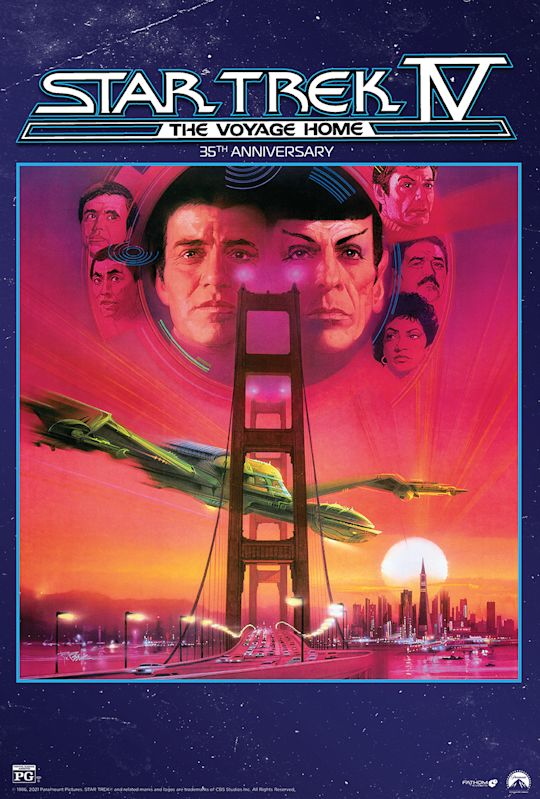
Sigourney Weaver was fighting Aliens, Ralph Macchio was back in The Karate Kid Part II, and Matthew Broderick was making comedy history with Ferris Bueller’s Day Off. But, for the second time in this series the film that made the biggest impact on me was a Star Trek movie. Star Trek IV: The Voyage Home.
I wrote a while back about the fantastic movie that I thought Star Trek II was. Star Trek III has never been one of my favorites, even though it was the story of how Spock came back from the dead. But it was successful enough for Paramount to trust Leonard Nimoy to fill the director’s chair one more time. The Voyage Home is the third part of the Star Trek trilogy, which a lot of fans call II, III, and IV. They have a story thread that runs through them, starting with the death of Spock, then the destruction of the Enterprise, and finishing up here as the crew returns to Earth and takes on a new ship.
The difference in this movie and the others is that it is a comedy, though the premise doesn’t seem very funny. In the 23rd century a mysterious probe show up out of nowhere and starts evaporating the Earth’s oceans. It is threatening the life of the planet. Just as this is happening, the Klingon Bird of Prey that the Enterprise crew took over in the last movie show up. Spock does a little bit of magic reasoning and figures out that the probe is trying to communicate with what it thinks is the main life form of Earth, humpback wales. They were prominent in the oceans the last time the probe came around a few million year ago. But by then they’re all gone. So, Kirk decides to do what any of us would do…go back in time and scoop up a couple of whales.
So, we get a funny movie about Kirk, Spock, McCoy and company walking around in San Francisco in 1986. Most of them are human, but their reality is so far removed from what life was like in their ancient past that it’s hilarious to see them try to blend in. A lot of the comedy comes from watching Spock doing the nerve pinch on a bus punk, McCoy resurrecting a bed-ridden old lady with some future medicine, Scotty causing a paradox by inventing future materials, and Checkov asking various passersby where he can find the “nuclear wessel”.
As far as plot…there isn’t really much. This movie was supposed to be a light-hearted romp and give fans a welcomed breather after the heavy plots of the last two films. The crew had dealt with the death and resurrection of their friend. This time, they were looking for whales in the past.
That’s all that I really have to say about it. It’s not the best Star Trek movie…but of all the movies that came out in 1986, it is the one that had the biggest impact on me. I love Star Trek…and I love time travel. Some of the best Star Trek episodes had to do with time travel, and this was the first film that dealt with it. It wasn’t the last, and it didn’t even do it the best. That distinction belongs to First Contact. But, if you want to have a fun adventure with the crew of the Enterprise…er, HMS Bounty…The Voyage Home is the way to go.
When I was a kid, I wanted to be an astronaut. I read every book that my library had about the space program, the planets in our solar system, the moon, NASA…you name it. So, when I was I the third grade and we got the news that a teacher was going to go into space and conduct classes for us on television. I was thrilled.
That was the year the Challenger exploded a few second after blast off. The entire crew died.
That we saw it happen made it so much harder to deal with. It was a defining moment in my life. It was the moment that I realized that not all the stories had a happy ending.
I just wanted to take a moment and acknowledge that at the top of this entry. But this blog is about movies, and there were a few of them in 1986.
Sigourney Weaver was fighting Aliens, Ralph Macchio was back in The Karate Kid Part II, and Matthew Broderick was making comedy history with Ferris Bueller’s Day Off. But, for the second time in this series the film that made the biggest impact on me was a Star Trek movie. Star Trek IV: The Voyage Home.
I wrote a while back about the fantastic movie that I thought Star Trek II was. Star Trek III has never been one of my favorites, even though it was the story of how Spock came back from the dead. But it was successful enough for Paramount to trust Leonard Nimoy to fill the director’s chair one more time. The Voyage Home is the third part of the Star Trek trilogy, which a lot of fans call II, III, and IV. They have a story thread that runs through them, starting with the death of Spock, then the destruction of the Enterprise, and finishing up here as the crew returns to Earth and takes on a new ship.
The difference in this movie and the others is that it is a comedy, though the premise doesn’t seem very funny. In the 23rd century a mysterious probe show up out of nowhere and starts evaporating the Earth’s oceans. It is threatening the life of the planet. Just as this is happening, the Klingon Bird of Prey that the Enterprise crew took over in the last movie show up. Spock does a little bit of magic reasoning and figures out that the probe is trying to communicate with what it thinks is the main life form of Earth, humpback wales. They were prominent in the oceans the last time the probe came around a few million year ago. But by then they’re all gone. So, Kirk decides to do what any of us would do…go back in time and scoop up a couple of whales.
So, we get a funny movie about Kirk, Spock, McCoy and company walking around in San Francisco in 1986. Most of them are human, but their reality is so far removed from what life was like in their ancient past that it’s hilarious to see them try to blend in. A lot of the comedy comes from watching Spock doing the nerve pinch on a bus punk, McCoy resurrecting a bed-ridden old lady with some future medicine, Scotty causing a paradox by inventing future materials, and Checkov asking various passersby where he can find the “nuclear wessel”.
As far as plot…there isn’t really much. This movie was supposed to be a light-hearted romp and give fans a welcomed breather after the heavy plots of the last two films. The crew had dealt with the death and resurrection of their friend. This time, they were looking for whales in the past.
That’s all that I really have to say about it. It’s not the best Star Trek movie…but of all the movies that came out in 1986, it is the one that had the biggest impact on me. I love Star Trek…and I love time travel. Some of the best Star Trek episodes had to do with time travel, and this was the first film that dealt with it. It wasn’t the last, and it didn’t even do it the best. That distinction belongs to First Contact. But, if you want to have a fun adventure with the crew of the Enterprise…er, HMS Bounty…The Voyage Home is the way to go.
Subscribe to:
Posts (Atom)